Detailed design review of the largest H₂ production plant in the Benelux
Process safety
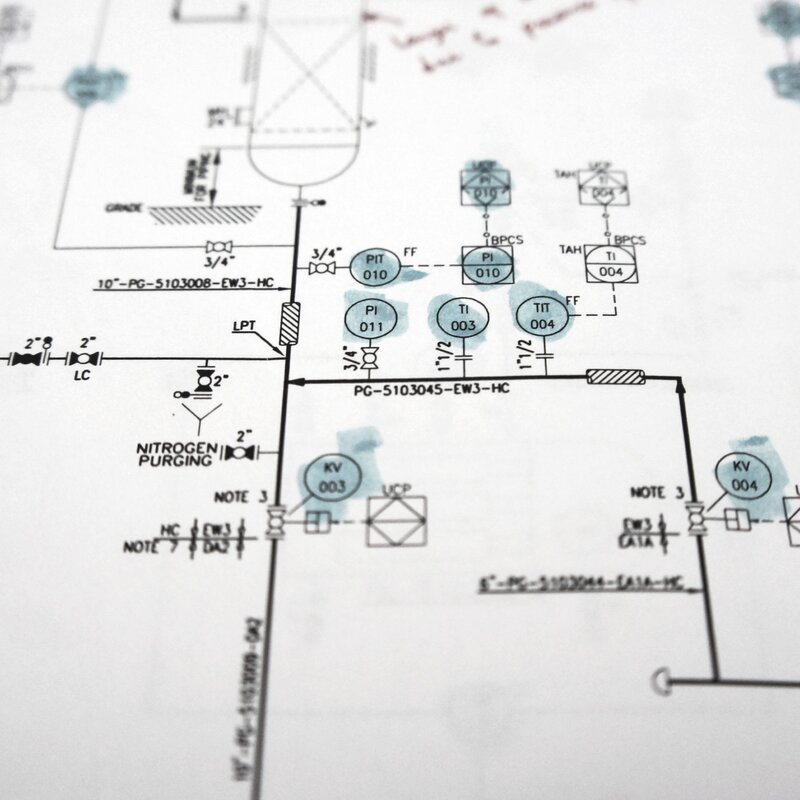
Prohead Engineering acted as owner's engineer to verify the complete detailed engineering of the EPC joint venture for engineering practices, technical safety and compliance.
About the case
Context:
For one of the largest green hydrogen production plants in the Benelux, Prohead Engineering carried out an in-depth review of the EPC partner's detailed engineering. The plant starts with an electrolyser capacity of 25 MW, expandable to 100 MW, and is designed for an annual output of ~14,000 t H₂ at full production. Objective: demonstrate technical compliance and make the design robust with a view to future standards and operation.
Scope & methodology:
Our review covered four domains: process (safety), automation, functional safety (SIS) and OT cybersecurity. We worked iteratively with the EPC team, with periodic status meetings and deliverable checks.
1) Process & process safety
- HAZOP & LOPA: full tracing of HAZOP findings to LOPA cases for critical scenarios (electrolyser upsets, compressor/booster, buffer storage, trailer loading bay).
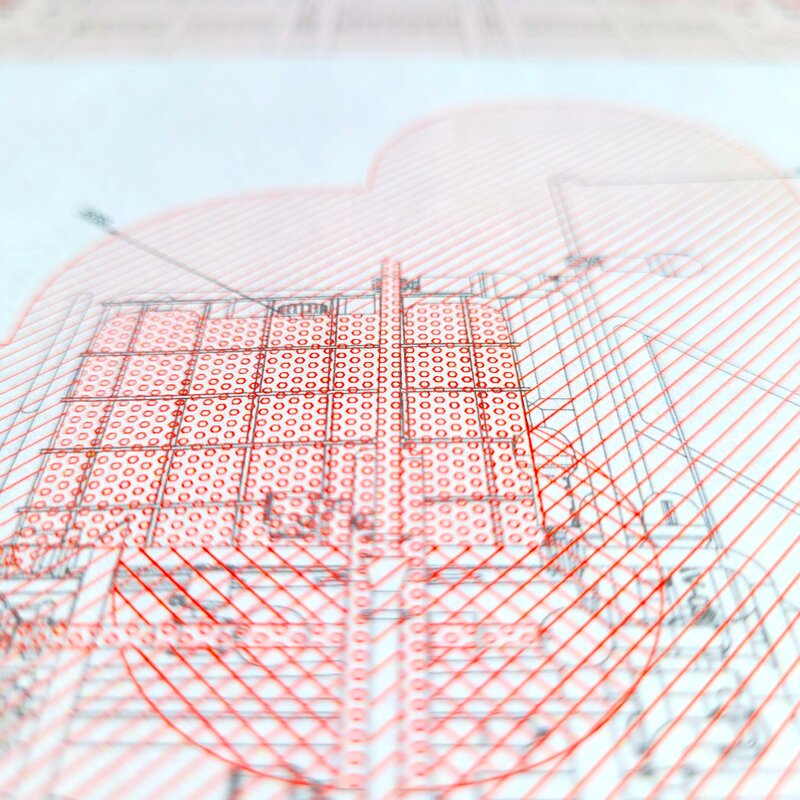
- ATEX conformity (2014/34/EU): update of zoning, equipment selection (gas group/temperature class) and External Influences (environment, corrosion, IP, temperature).
- H₂ venting & dispersion: resizing of vent stacks and optimisation of vent points (height, position, discharge direction) taking into account:
- the low ignition energy of H₂,
- the wide flammable range (LEL ~4 % – UEL ~75 %),
- the high diffusion rate and upward plume formation,
- with particular attention to air intakes, walkways and ignition sources (hot surfaces, electrical).
- Detection & ventilation: set points, location and redundancy of H₂ detectors aligned with ventilation patterns and maintenance access.
2) Automation
- C&E matrices (trip, shutdown, permissives) derived from HAZOP/LOPA.
- Alarm rationalisation (priority, shelving, annunciation) to prevent alarm flooding and ensure operator response.
- BPCS-SIS interfacing and network segmentation for OT security (see §4).
3) Functional safety (IEC 61508/61511)
- SRSs per SIF (process trips, ESD, blowdown, vent).
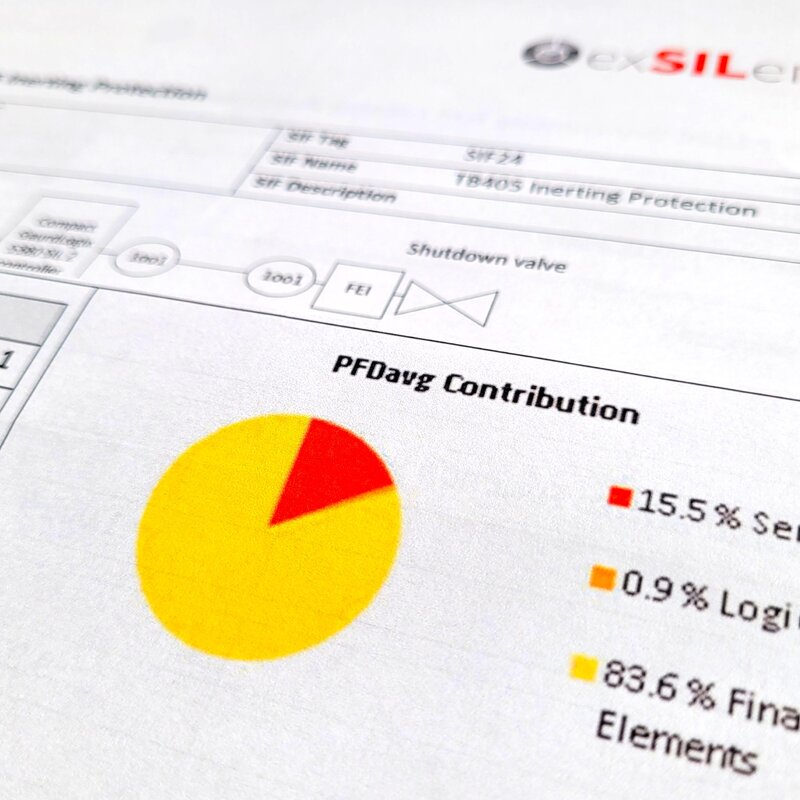
- SIL verifications (PFDavg, SFF, HFT, test intervals) with substantiated failure data and proof-test procedures.
- FSA (Functional Safety Assessment) across lifecycle steps: specification → design → verification → pre-commissioning.
- Result: critical SIFs confirmed at SIL 2; testability and maintenance strategy defined.
4) OT cybersecurity (IEC 62443)
- Zone & conduit modelling (levels 1/2/3, DMZ),
- Defence-in-depth measures (RBAC, hardening, patching, logging),
- BPCS/SIS separation, remote access governance and back-up/restore.
Key deliverables (selection):
- Engineering status summary & status presentations (periodic, with action log and decision points).
- HAZOP/LOPA overview with a traceable link to C&E and SRS.
- ATEX file including External Influences evaluation and equipment selection.
- SRS package, SIL verification reports and FSA report.
- OT security architecture and minimum security requirements for suppliers.
Optimisations achieved:
- Venting: stack height/orientation adjusted to ensure dilution < 25 % of the LFL at air intakes and maintenance positions; additional non-return and cold ignition mitigation evaluated.
- Detection/ventilation: detector layout and test access improved; ventilation capacity and intake aligned with plausible leak rates.
- SIF portfolio: ESD/BD logic tightened; proof-test intervals chosen to balance availability and SIL requirements.
- OT segregation: SIS physically/logically shielded from the BPCS and the rest of the OT network; remote maintenance via controlled jump hosts.
Result & added value:
The plant has a traceable, audit-ready safety and security design: ATEX-compliant, SIL-verified and substantiated according to IEC 62443. The review delivered directly implementable design changes (venting, detection, C&E, network zoning) and a clear roadmap towards scaling up to 100 MW and evolving regulations in the hydrogen value chain.