GAP analysis, engineering and complete EPD for one of Europe's largest OSB plants
Explosion safety
Prohead Engineering is equally at home analysing and controlling gas and dust explosion risks.

About the case
Context:
A Belgian industrial site with several silos and installations for processing wood-based raw materials wanted its explosion safety assessed and documented in accordance with the ATEX directives and the AREI. At the start of the project, a GAP analysis was performed on the existing installations and the Explosion Protection Document (EPD).
GAP analysis:
The analysis showed that most installations were already largely in line with the requirements of Directive 1999/92/EC (ATEX 153), but that one specific silo was not ready for compliance. Both structural and organisational shortcomings were identified for this silo:
- insufficient documentation on explosion venting;
- unclear alignment of detection and extinguishing systems;
- no clear link with the rest of the process safety framework.
Explosion safety engineering for the silo:
A separate engineering project was set up for the silo concerned:
- Calculations of the required explosion venting in accordance with EN 14491 and EN 14994;
- Evaluation of the options for explosion suppression and inerting;
- Drawing up a safety matrix for the interfacing with adjacent installations;
- Integration into the central control system with attention to functional safety (link to EN 61511).
A technical curiosity was that the silo was initially fitted with panels that were not certified for the intended explosion pressure level. This required a recalculation of the vent areas and the choice of an alternative solution with higher reliability.
Explosion Protection Document (EPD):
In parallel with the engineering of the silo, the EPD for the rest of the site was supplemented and updated. Among other things:
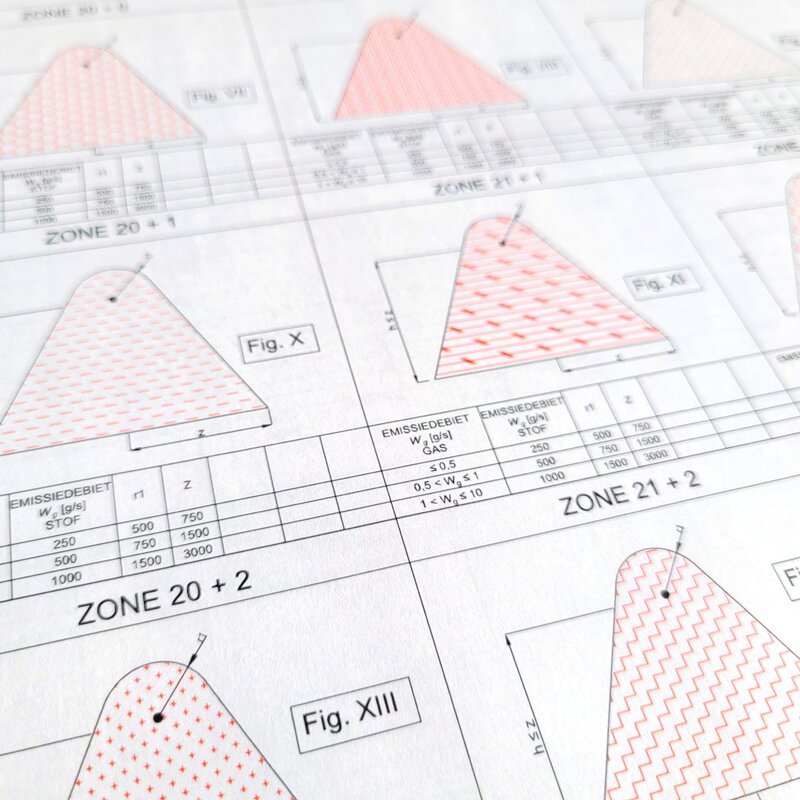
- all zones were reclassified in accordance with NBN EN IEC 60079-10-2;
- organisational measures were defined (maintenance, training, work permits);
- recommendations were formulated for the follow-up of temporary situations, such as shutdowns or changes in raw material flows.
An interesting side effect was that the power balance of the dust extraction system had to be revised, because the supply ventilation had an unexpected influence on the pressure distribution in the event of an explosion.
Result:
The project delivered:
- a conclusive compliance approach for the silo that initially did not comply;
- an updated and complete EPD for the entire site;
- concrete recommendations covering both structural and organisational measures.
This enabled the company to demonstrate that the plant as a whole operated in compliance with explosion safety legislation, with demonstrably increased safety, reliability and business continuity.