PSV calculation for storage tanks
Process safety
In addition to process design assignments, Prohead Engineering performs many process safety related calculations, including PSV sizing.
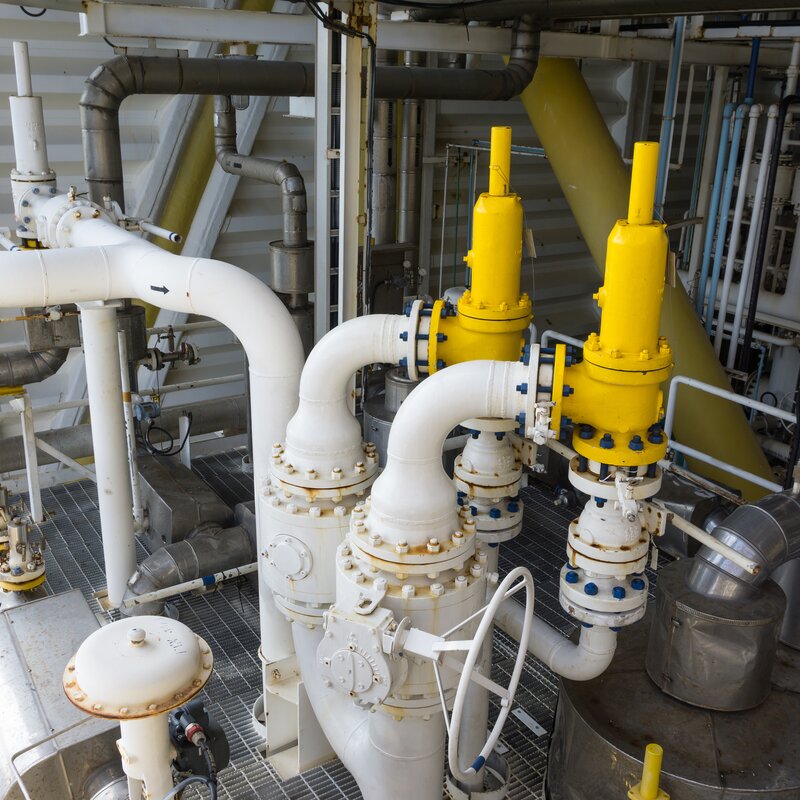
About the case
Context:
A chemical company had several above-ground tanks for storing xylene. For this installation, the sizing of the pressure relief systems (PSVs) had to be re-evaluated in light of current operating conditions and applicable international standards. Demonstrable compliance with API 520/521, the PED directive and the requirements of the Belgian Code on Well-being at Work was essential.
Approach:
Prohead Engineering carried out the calculations and analyses using established international methods:
- Determination of the design and operating conditions of the tanks, including the liquid properties of xylene (vapour pressure, boiling point, heat capacity).
- Scenario selection for possible overpressure conditions:
- external fire load,
- inert gas blanketing in- and outflow,
- thermal expansion of the liquid,
- operational errors (filling too fast).
- Calculations of the required relieving capacity of the PSVs, including the F-factor for xylene, to take account of the specific heat transfer coefficients.
- Drawing up capacity curves for the various tanks to visually substantiate the relationship between F-factor, heat load and vent capacity.
- Validation of the existing vent sizing and comparison with the theoretically required flow diameters.
Results and conclusions:
The calculations showed that:
- The existing PSVs were largely correctly sized, but for one tank the vent diameter had to be adjusted to fully cover the required capacity in the fire scenario.
- The fire load was the governing scenario, considerably more decisive than thermal expansion or inert gas overpressure.
- Using the xylene-specific F-factor was crucial to arrive at realistic and safe sizing.
Added value:
Thanks to the thorough methodology and detailed reporting, the client now has demonstrably compliant and technically robust PSV sizing. The reports with calculation curves also form a valuable reference for future inspections, audits and expansions.