HAZOP of an industrial NH₃ heat pump
Utilities
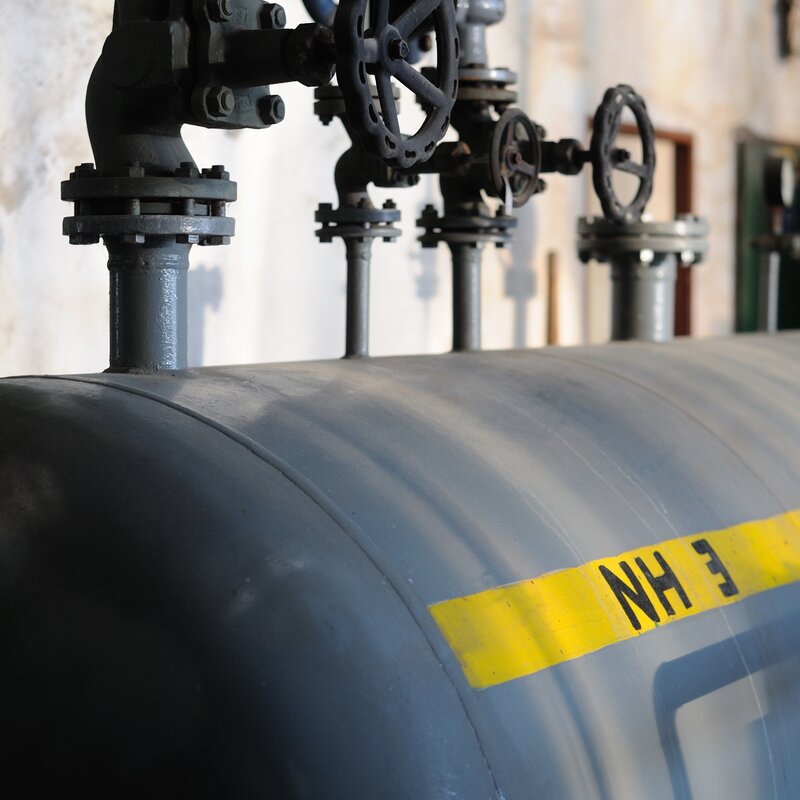
An ammonia (NH₃) heat pump was selected to renew the process heat supply. Because NH₃ is toxic (B2L, EN 378) and flammable under certain conditions, the client requested an independent HAZOP review before commissioning. The study was carried out with both the manufacturer and the end client to secure design choices and operational agreements.
About the case
Context:
The heat pump comprises a compressor/evaporator/condenser skid with oil circulation, a purge unit for non-condensables, an NH₃ buffer, and mechanical pressure relief to the outside air. Ancillary systems: gas detection, emergency ventilation, an ESD chain, and a link with the building management system.
Approach:
- Preparation & scope — Consolidation of P&IDs and node lists (compressor train, oil return/drain, economiser/bypass, evaporator and condenser circuit, purge unit, relief header, buffer, water and air side). Methodology according to IEC 61882 (HAZOP), with design references to EN 378 (refrigerating systems and heat pumps) and EN 13136 (pressure relief).
- Workshops — Systematic check of deviations: No/More/Less Flow; High/Low P/T; Reverse Flow; Composition; Utility Failure. Key scenarios: NH₃ leakage at fittings/flanges, overpressure due to blockage or blocked-in volumes, oil carry-over, purge faults, thermal expansion during shutdown, incorrect economiser switchover, power failure.
- Safeguards & engineering — Verification and refinement of:
- Pressure relief: recalculation (including fire/external fire and blocked-in) in accordance with EN 13136; check of relief header diameters, backflow protection and an unobstructed discharge location.
- Gas detection & ventilation: detector locations based on NH₃ density, trip/alarm levels (EN 378), interlocks with emergency ventilation/ESD, and avoidance of dead zones (CFD input where relevant).
- Purge unit: safe blow-off (height, avoiding re-entrainment), logging and maintenance access.
- Oil management: procedural and hardware measures for closed oil draining, crankcase heating and protection against liquid slugging (suction accumulator).
- Control: unambiguous FRS, interlock and alarm lists, reset philosophy and SAT test points.
Result & added value
- Action list with priority and owner (mandatory vs. recommendation), incorporated into design and commissioning.
- Adjusted relief capacities and controlled discharge direction; optimised detection and ventilation interlocks with tested fail-safe behaviour; double block & bleed on critical branches.
- Traceable compliance with IEC 61882 / EN 378 / EN 13136 and a clear package (FRS, interlock/alarm lists, updated P&IDs) for commissioning, SAT and MOC.
- Net effect: lower incident risk, safer maintenance, and a demonstrably compliant NH₃ heat pump that can be operated with confidence.