Methodology for an ATEX EPD project
Explosion safety
Prohead Engineering guides installations with explosion risks from the initial analysis to an approved Explosion Protection Document. The process is aligned with ATEX Directive 99/92/EC (ATEX 153) and the AREI and delivers clear decisions and usable documents at every phase.
Step-by-step plan:
- Analysis
- Preliminary studies
- ATEX study
- Support during execution
- Drafting the EPD
- Inspection process
- Periodic updating
Phase 1 — Analysis:
We start by thoroughly reviewing all available documents and then carry out a site walk-through. During the walk-through, we identify all locations where an explosion hazard may occur and check the completeness, correctness and depth of the information provided. On that basis, we draw conclusions on the actions needed to achieve conformity and discuss them with the client until there is a supported plan of approach. If this analysis shows that the design provides a sufficient basis and the required process and product information is available, we skip the preliminary studies and the ATEX study and proceed directly to drafting the EPD with zoning drawings.
Phase 2 — Preliminary studies:
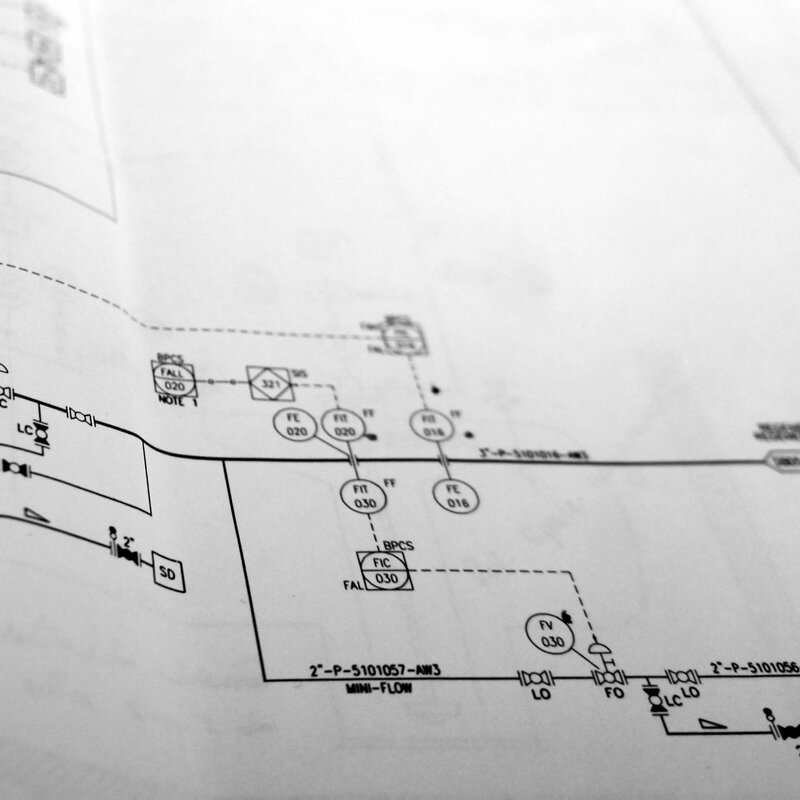
If the analysis shows that additional substantiation is needed, we redraw the relevant parts of the installation so that the design can evolve towards a compliant execution. We coordinate the necessary product tests, map the product flows to determine where and how substances are used, develop a process flow diagram (PFD) where one is missing and carry out a process hazard analysis to remove remaining uncertainties. We bundle the results in an advisory note or study report that provides the substantive input for the ATEX study.
Phase 3 — ATEX study:
We carry out the risk study by systematically identifying the risks, analysing the sources, evaluating the risks and defining appropriate risk reduction measures. We then classify the hazardous areas and record them on zoning drawings. If base drawings are not available, we first draw up the necessary base drawings so that the zoning can be worked out correctly. We present the results to the client, ensuring that the design is ready for (re)construction and procurement.
Phase 4 — Support during execution:
During execution, we support the client and the contractors so that the measures are correctly reflected in design and execution. We select suitable materials, add the required ATEX provisions to purchase specifications, provide specific engineering (such as sizing of bursting discs, design of extraction systems and material specifications) and provide on-site support with any questions. We verify on site whether the execution corresponds to the study and the selected components and record findings and actions up to and including the as-built.
Phase 5 — Drafting the EPD:
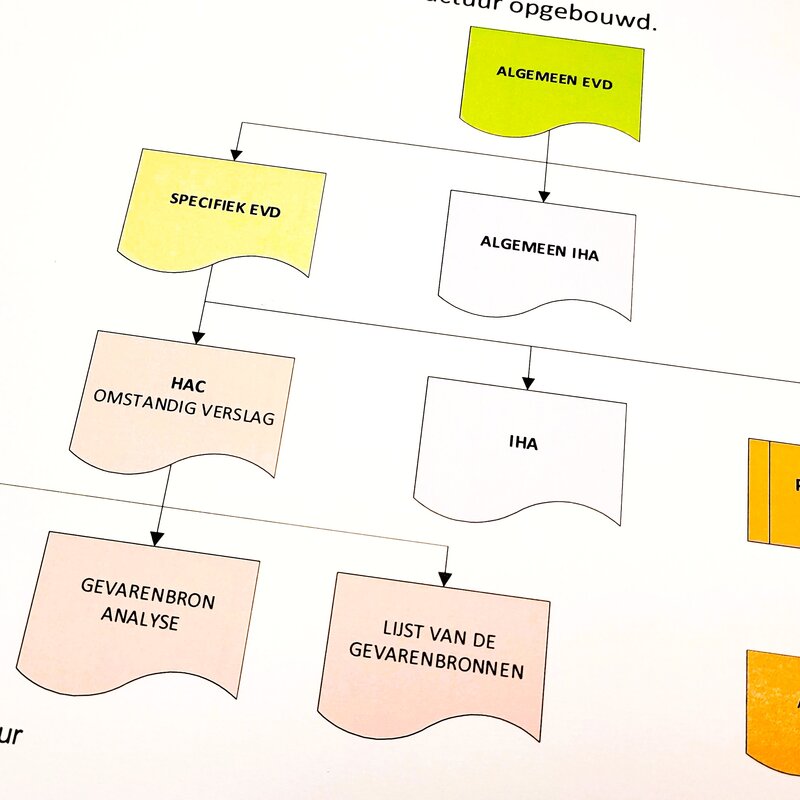
Once the required measures have been implemented, we compile the Explosion Protection Document. The following parts are only updated if Phase 3 (ATEX study) has been completed: we update the risk identification by describing the activities and work situations involving explosion risks, we revise the source analysis with the media, volumes and frequencies used, and we evaluate the remaining risks. We record the primary risk control aimed at preventing explosive mixtures. We confirm the zoning by describing the classification and adding zoning drawings; if base drawings were previously missing, we drew them up in Phase 3 and use them here as the foundation. Finally, we add the analyses of secondary, tertiary and quaternary risk control, so that ignition sources, structural measures and incident management are also demonstrably covered. We present the complete EPD to the client so that it can be adopted internally.
Phase 6 — Inspection process:
We prepare the inspection by the accredited inspection body by coordinating in good time, organising a preliminary visit and processing any comments. After this cycle, we submit the final EPD for approval, so that conformity with ATEX 99/92/EC and the AREI zoning framework can be demonstrated.
Periodic updating:
To keep the EPD up to date, we schedule periodic impact meetings. During such a session, we jointly assess the impact of recent or planned changes, review the risk zones concerned and update the action plan and the EPD, so that the file continues to control the explosion risks and supports conformity with ATEX and the AREI.