Antistatic clothing
Explosion safety
When do you need to wear antistatic clothing, and when not? We list everything for you.
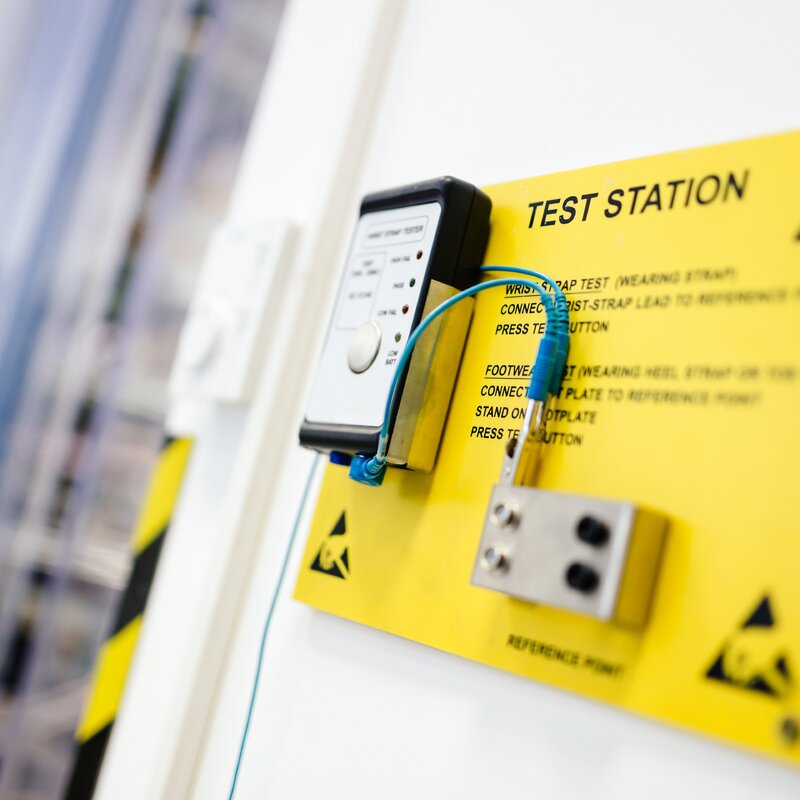
In ATEX zones, wearing antistatic clothing is not mandatory in all cases. IEC 60079-32-1 contains a table indicating when antistatic clothing is mandatory, recommended or not necessary. This depends on the nature of the zone (0, 1, 2 or 20, 21, 22), the MIE (minimum ignition energy) and the likelihood of electrostatic charging.
For a correct assessment, we recommend consulting this standard, in particular section 11.5 with the table below.
In addition, the clothing must fit as closely as possible and must not be taken off or unfastened in zones where a flammable atmosphere may occur (e.g. Zone 0, Zone 1, Zone 20 and Zone 21).
Wearing antistatic footwear is generally mandatory in ATEX zones. Only for zone 22 may the need be investigated further in some situations.
The ATEX 153 Directive (Annex 2) states that when preventing ignition hazards, electrostatic discharges from workers or the working environment must also be taken into account. Workers must therefore be provided with appropriate working clothing that does not cause electrostatic discharges capable of igniting an explosive atmosphere. On this basis, one could conclude that antistatic clothing is in principle always required.
Article 4 of the ATEX 153 Directive states that the employer must assess the specific risks arising from explosive atmospheres. This must take into account at least:
- the likelihood that an explosive atmosphere will occur and persist;
- the likelihood that ignition sources, including electrostatic discharges, will be present and become active;
- the installations, substances and processes used and their possible interactions;
- the scale of the anticipated effects of an explosion.
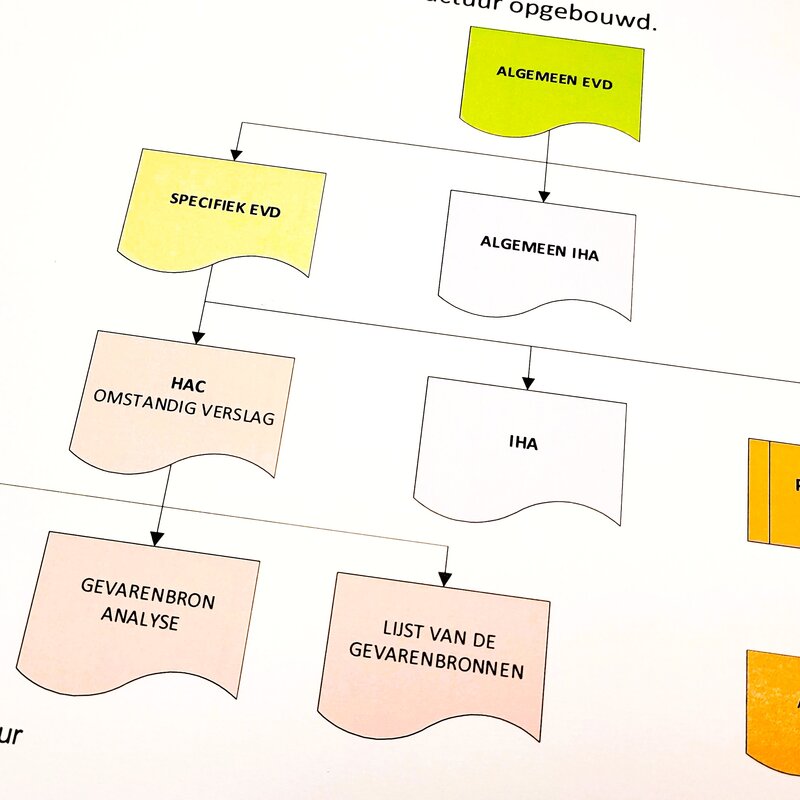
Explosion risks must be assessed as a whole. This means that — in relation to the hazardous area — both the likelihood of charging and the likelihood of actual ignition must be considered. Based on this risk assessment, it can be determined whether wearing antistatic clothing is necessary. This is done by means of an ignition source analysis (IHA).
In addition, according to VLAREM 5.17.4.1.7 §4, suitable clothing and footwear that cannot cause sparking must be worn.