Do you become a "manufacturer" when you modify a machine?
Machine safety
The Machinery Regulation introduces the concept of "substantial modification": a physical or digital modification not foreseen by the original manufacturer that affects safety by creating a new hazard or increasing an existing risk. If you make such a modification, you become the manufacturer of the modification and must (again) carry out a conformity assessment and provide documentation.
The answer is: sometimes. It depends on the impact of the modification on safety. The Machinery Regulation introduces and defines the concept of “substantial modification”. This is a physical or digital modification that was not foreseen or planned by the original manufacturer and that affects safety by creating a new hazard or increasing an existing risk. Anyone who carries out such a substantial modification is regarded, within the meaning of the regulation, as the manufacturer of that modification and must comply with the obligations of a manufacturer.
You may have good reasons to modify an existing machine. An extra function may be needed in the process, the layout may have to change to make room, or you may want to increase performance. If the original manufacturer modifies the machine itself, or expressly authorises a third party within its responsibility, it remains responsible in principle. In practice, the latter rarely happens; if you modify it yourself, you need to determine what this means for the conformity of the machine.
The first step is to assess whether the modification is likely to be “substantial”. This is typically the case when you change the function of the machine, add a module that affects the safety function or safety level, or modify the control system and software in a way that affects safety. The same may apply when you process products other than those for which the machine was designed, or use tools other than originally intended. The Machinery Regulation also clarifies that substantial modifications can be digital in nature.
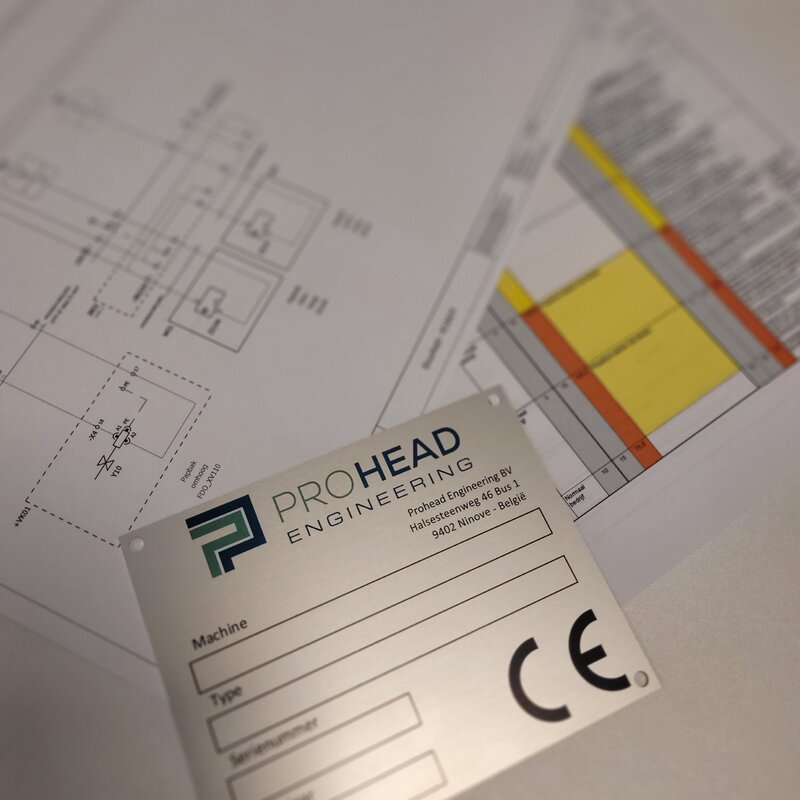
Next, you carry out a risk assessment to determine whether the modification creates new hazards or increases existing risks. If not, there is no substantial modification and it is sufficient to update your risk assessment and, where necessary, instructions and markings. If the modification does lead to new or higher risks, it is a substantial modification and you are the manufacturer of the modification. You then go through the appropriate conformity assessment for the modified aspects, draw up or update the technical file, issue an EU declaration of conformity and affix the CE marking as prescribed.
Digital modifications explicitly receive more attention under the new rules. Software or firmware changes that may affect safety fall within the assessment framework, and the regulation places extra emphasis on the reliability of control systems and protection against corruption. In conjunction with the broader EU cybersecurity legislation, it is foreseen that certification or statements under recognised cybersecurity schemes may give a presumption of conformity for the relevant safety requirements of the control system. For operators, this means that safety-relevant software changes must be managed and demonstrable.
Finally, it is useful to clarify when you are regarded as the manufacturer regardless of modifications. This is the case when you build a machine for your own use, when you import a machine directly from outside the EEA, or when you combine several machines into one functional whole, for example a packaging or assembly line. In all these situations, you bear the manufacturer's obligations.
Note that Machinery Directive 2006/42/EC remains applicable up to and including 19 January 2027. From 20 January 2027, only the Machinery Regulation (EU) 2023/1230 applies; there is no period during which both regimes can be applied in parallel.